When I speak to Aseem Kapoor the day before his debut showcase for Satya Paul in London, he sounds remarkably composed for a man carrying the weight of a 40-year-old fashion legacy on his shoulders. Well, almost.

“It’s a very, very exciting time,” he says. “And at the same time, with the kind of attention, the kind of effort we have all put in, being nervous is very likely to happen. And it’s a good thing.”
The nerves are understandable. Untamed, presented at Lancaster House as part of SXSW London following an invitation from the UK Department for Business and Trade, marks Satya Paul’s first international presentation under Aseem’s creative direction. It also introduces Satya Paul Menswear to a global audience and signals the beginning of a new chapter for one of India’s most recognisable fashion houses.
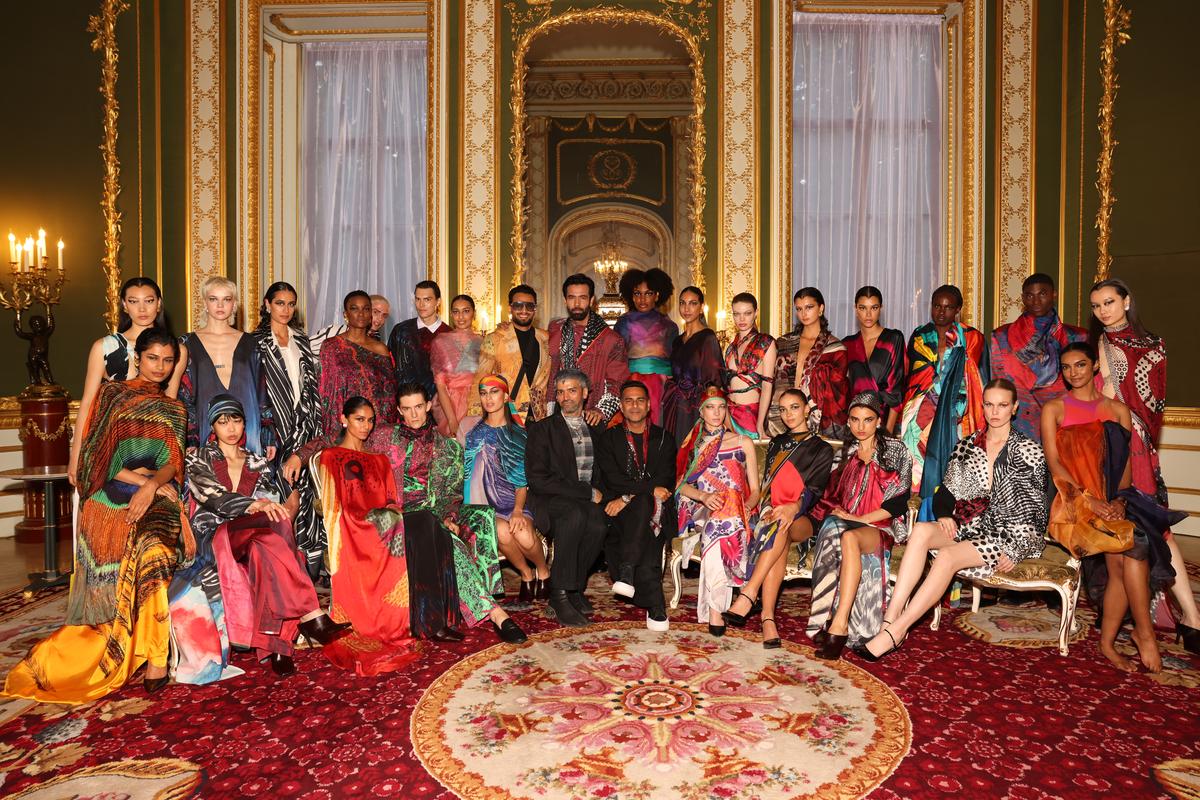
After the show in London
| Photo Credit:
Special arrangement
“I don’t want to make Satya Paul into Aseem Kapoor,” he tells me. “My whole existence should be what I can add as a layer to an existing legacy brand and what I can elevate in terms of what is already existing.”
It is a deceptively simple statement, but one that explains much of what unfolds in Untamed.
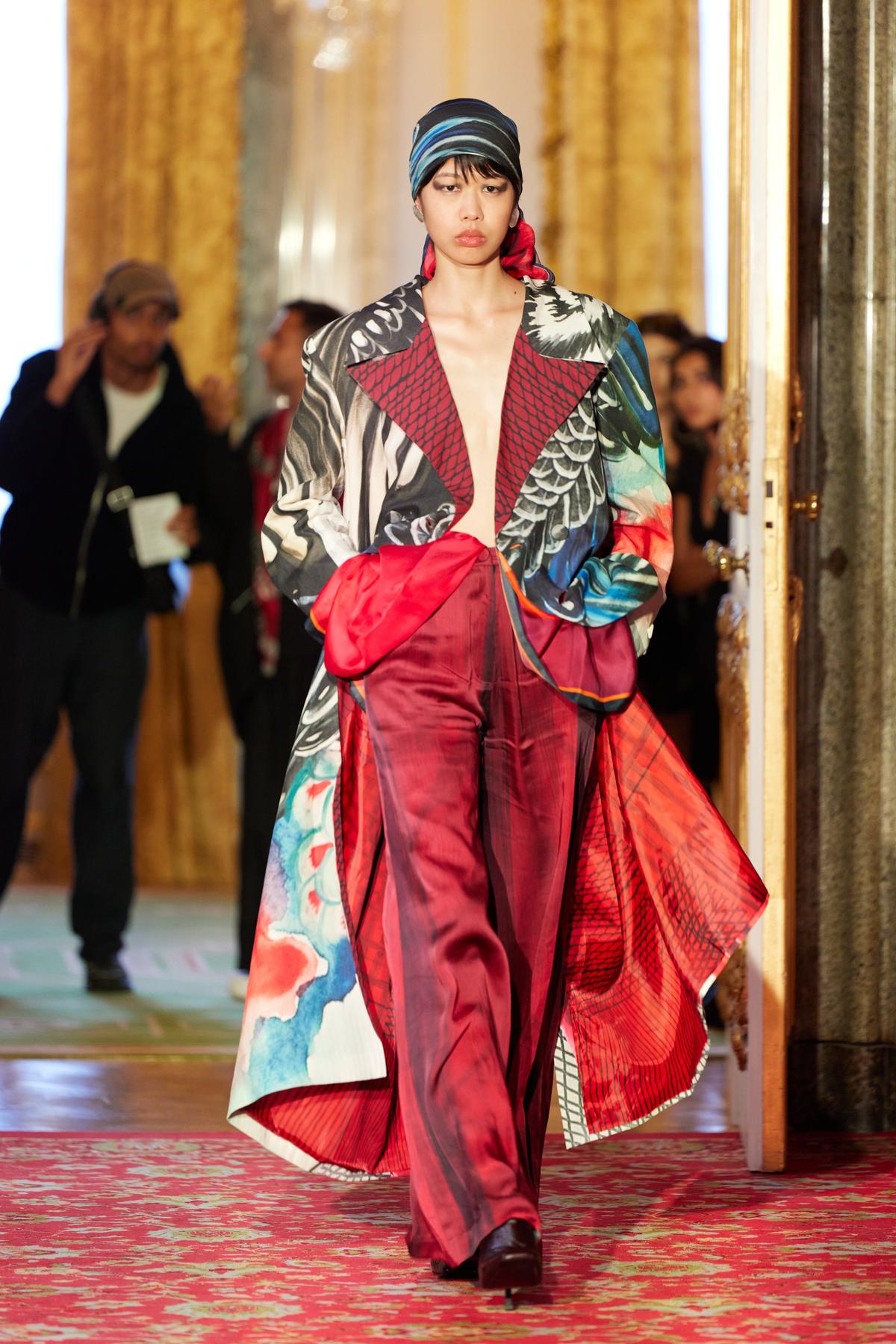
Menswear-inspired womenswear dominated
| Photo Credit:
TONI
A graduate of NIFT Mumbai, where his graduating menswear collection Wandering Tribes Gather No Dust won Best Menswear in 2003, Aseem spent nearly 15 years at Tarun Tahiliani before launching his own label in 2020. Across collections such as Sleti, Beyond Ken and Aakar, he developed a design language rooted in drape, layering and movement.
Fresh perspective
Founded in 1985, Satya Paul occupies a unique place in Indian fashion. For decades, women bought the brand as much for the print as for the garment itself. Long before Indian fashion became obsessed with storytelling, Satya Paul, who was among the first to reimagine the Indian sari as a contemporary fashion statement, becoming known for his conceptual patterns and unconventional use of colour, was also telling stories through bird motifs, dots, stripes, graphic motifs and artist collaborations became part of the house’s visual vocabulary. The brand became part of Reliance’s fashion portfolio after Reliance Brands Limited acquired a stake in Genesis Colors Ltd, the company that owned Satya Paul, in 2018, with a larger investment following in 2019.
What surprised Aseem most wasn’t the scale of the archive but how current it felt.
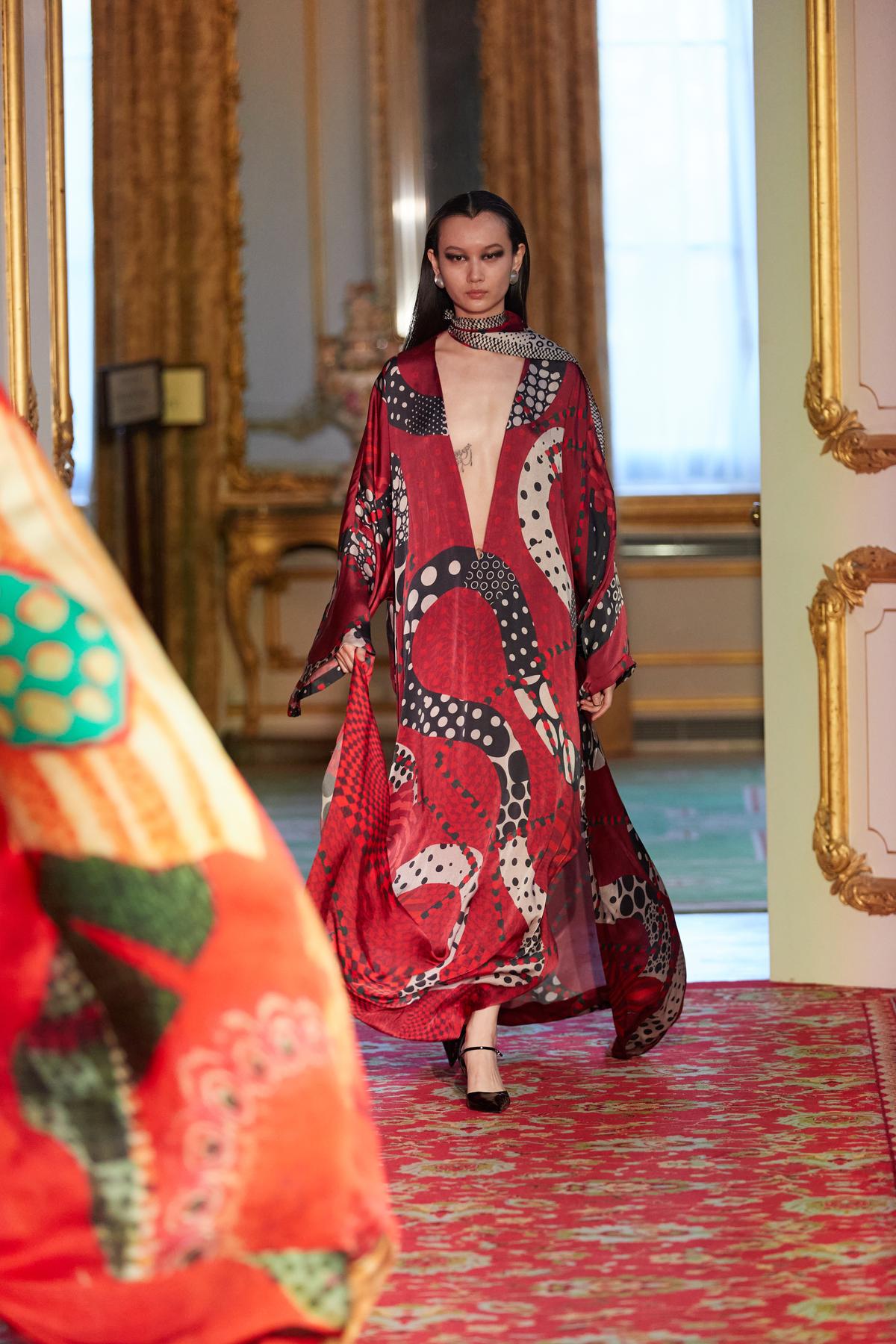
Draping and fluidity are Aseem’s signature
| Photo Credit:
Tumurtogtokh Davaakhuu
“When I was looking through the archives and I saw prints that were 30 years old and 25 years old, it still had a very modern approach,” he says. He found himself returning to the same conclusion over and over again. “Most of the things that I saw… this can work right now also.” Later, he puts it even more bluntly. “People are so much into the now fashion that they forget that the same thing after five years will start looking old and not so relevant.”
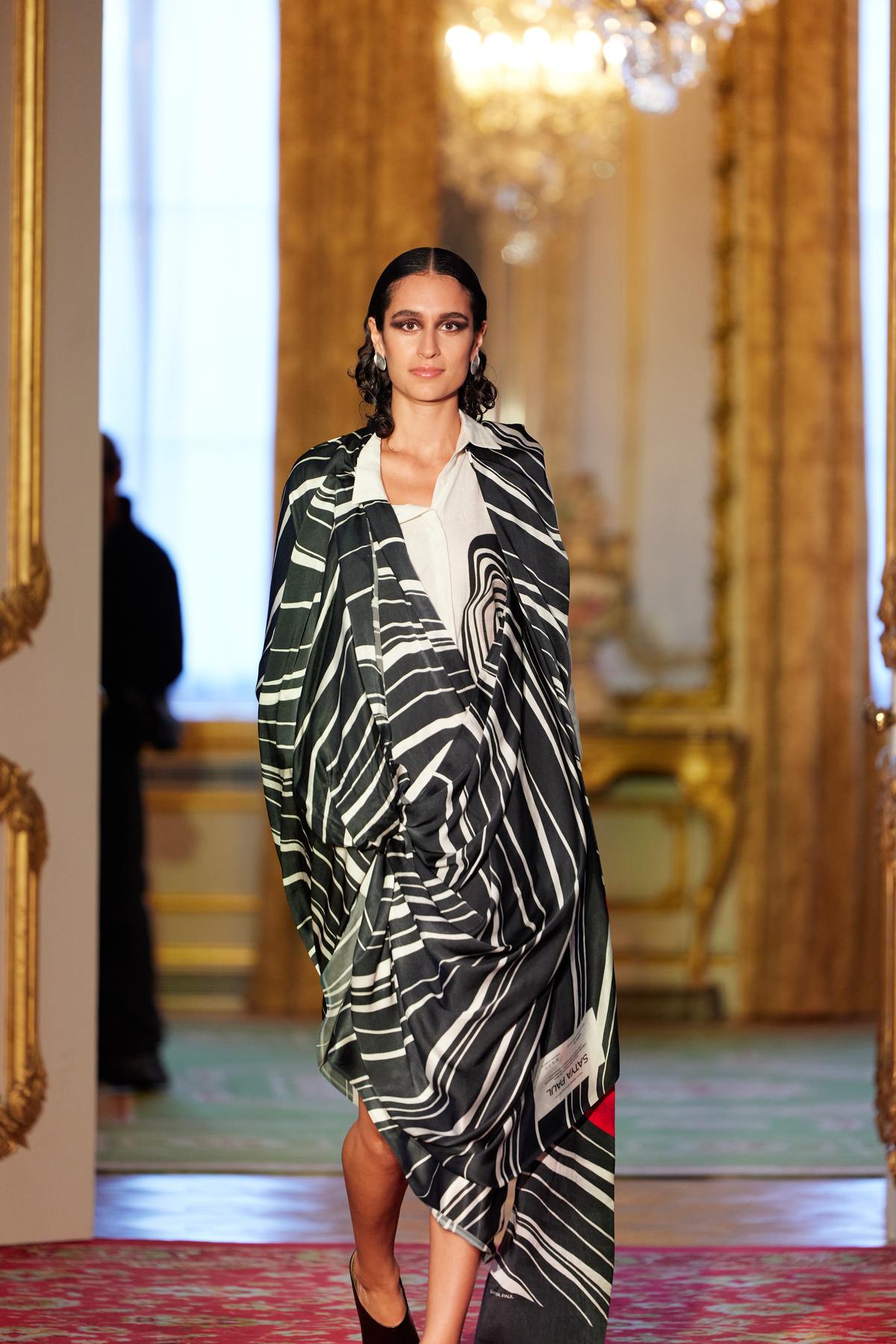
The zebra print
| Photo Credit:
TONI
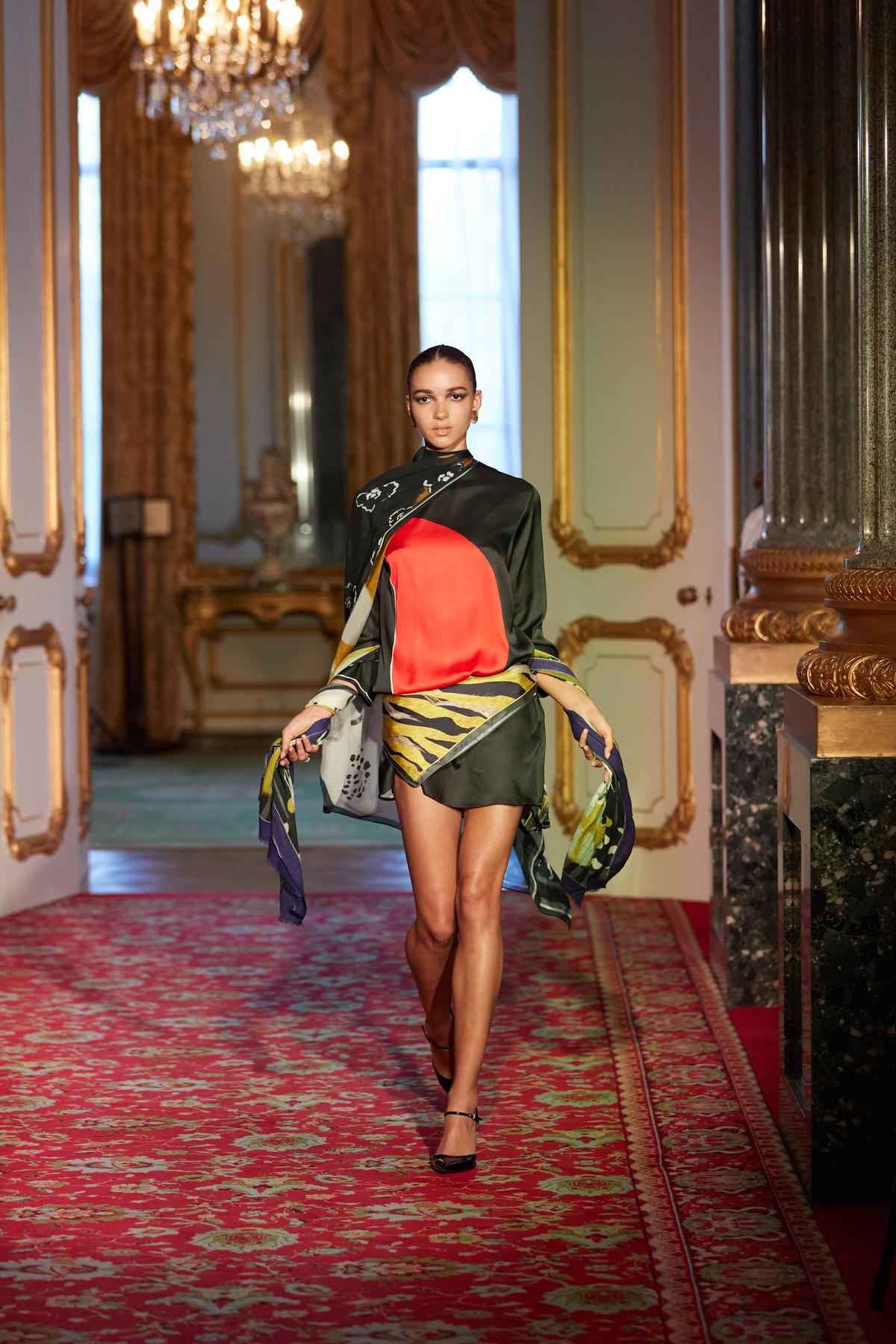
Looking at Untamed, it’s easy to see why the archives excited him. The showcase comprises 25 looks — 20 womenswear and five menswear — with nearly half drawing from archival references. Peacock motifs, dots, and pleated textures discovered in the archive sit alongside newly developed artworks, while zebra motifs, bird illustrations and graphic stripes make frequent appearances throughout the collection.

Looking at the collection, what becomes immediately apparent is that he has not tried to overwrite Satya Paul’s visual language. The birds are still there, so are the dots, stripes and zebra motifs. What has changed is the way they move.
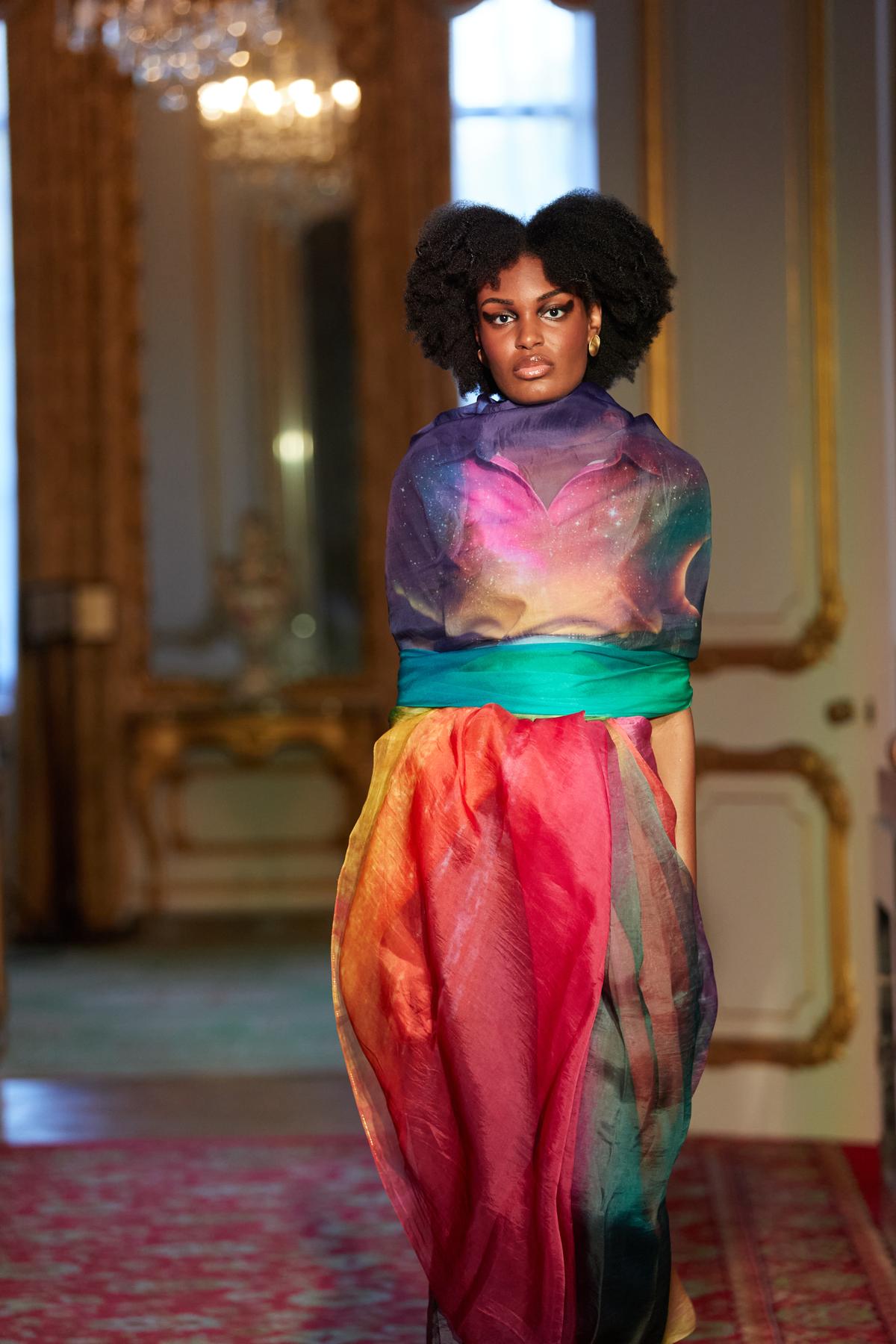
A zebra print bends around a shoulder and disappears into a fold. Graphic stripes twist around the body instead of running neatly across it. A bird illustration stretches across gathered fabric before resurfacing somewhere else entirely.
This is where Aseem’s years at Tarun Tahiliani, and later his own label, become visible.
The black-and-white striped sari dress is perhaps the clearest example. The print feels deeply rooted in Satya Paul’s archive, but the silhouette belongs entirely to Aseem. Rather than lying flat against the body, the fabric twists and gathers into something sculptural. Elsewhere, scarves become dresses, wraps become garments and drapes seem to float around the wearer rather than simply hang from them.
Throughout the collection, you get the sense that Aseem is less interested in designing around the print than allowing the print to respond to the body.
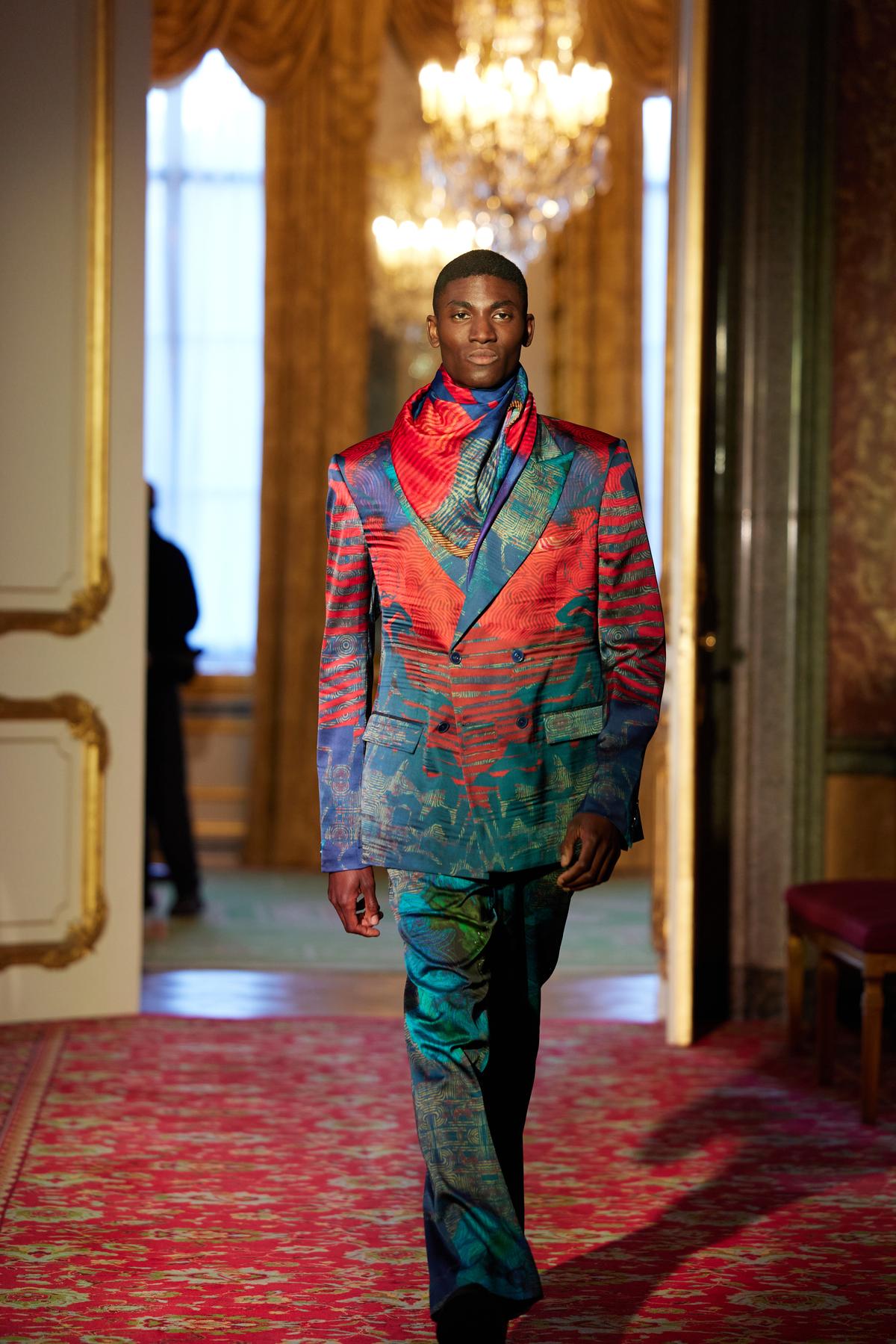
Menswear at Satya Paul
| Photo Credit:
TONI
One cocooned silhouette looks as though it has been wrapped around the wearer mid-step. A dramatic bird-print look folds around the body almost like a moving sculpture. Several pieces blur the line between sari, scarf, kaftan and gown altogether.
Historically, Satya Paul built an empire on printed textiles. Here, Aseem takes that heritage and gently pushes it forward. Scarves become necklines, dresses, waist treatments and sculptural elements. It feels contemporary without trying too hard to be contemporary, which is rarer than fashion would like to admit.
The menswear follows a similar logic. While Satya Paul has experimented with menswear before, this feels like its most integrated expression yet. Aseem introduces printed tailoring, statement outerwear and coordinated separates that carry the same sense of individuality found in the womenswear.
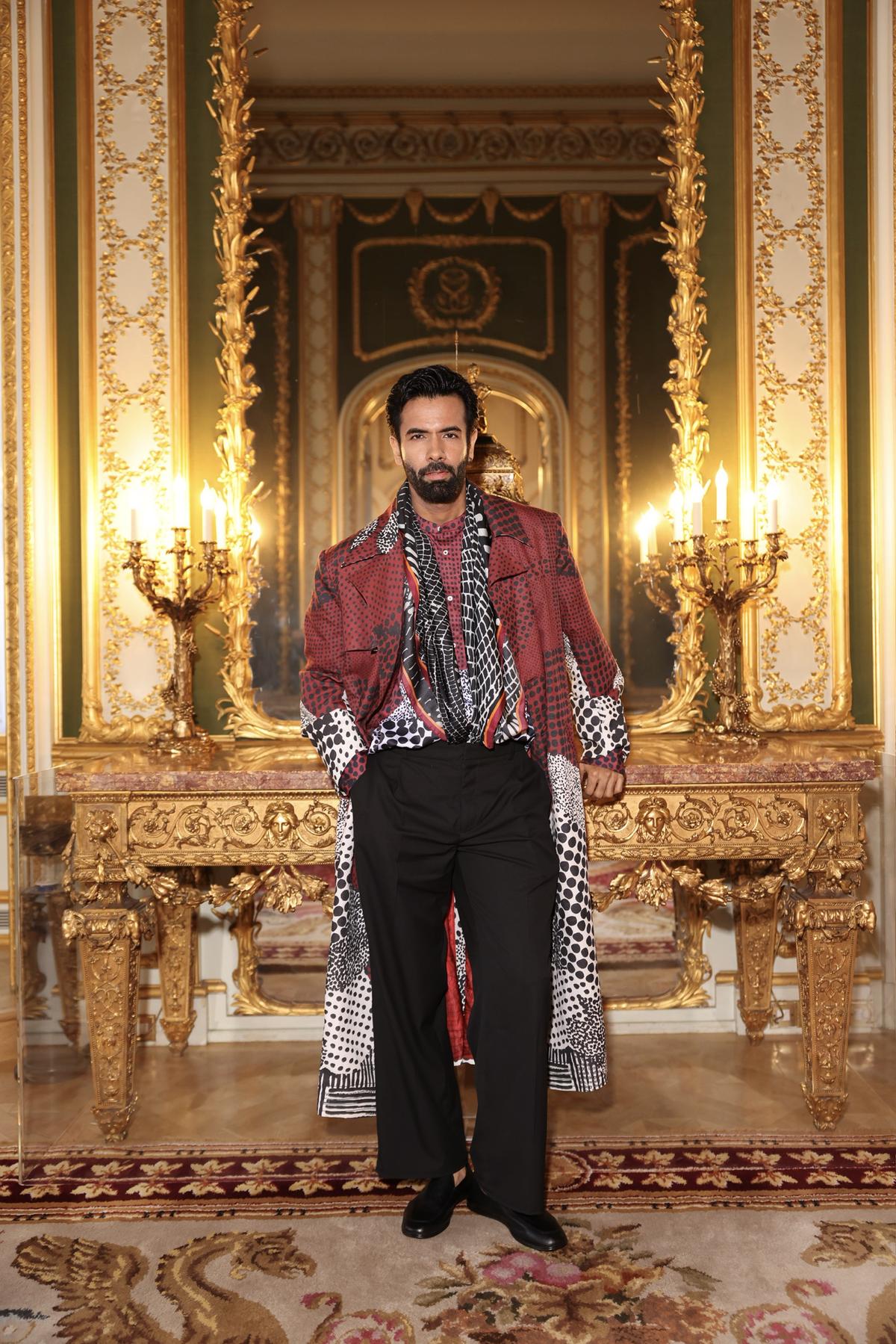
Actor and model Danish Pandor in Satya Paul
| Photo Credit:
Special arrangement
More significantly, the menswear resists the gravitational pull of Indian occasion dressing. There are no obvious wedding references. Instead, Aseem leans into the same ideas that define the womenswear: travel, movement, individuality and print. The result feels refreshingly unconcerned with the rules that typically govern Indian menswear.
Not every experiment in the collection lands perfectly. Some of the more heavily layered looks occasionally feel overworked, with the complexity of the drape competing against the complexity of the print. Satya Paul’s historical strength has often been graphic clarity, while Aseem thrives on layering and ambiguity.
Because what Aseem seems determined to preserve is not a specific print, product or silhouette, but a way of thinking.“What remains sacred is always the techniques, the quality, the approach and the aesthetic,” he says.
Later, he returns to another theme that feels particularly relevant today. “Today’s day and age, with so much AI, it’s very important to bring in the hand done. Art is something I really want to emphasise through collaborations with artists and a greater focus on hand-painting, which is such a beautiful part of the Satya Paul process. Every print begins as a hand-painted artwork. It is then scanned, reworked and developed into different versions, but it all starts with a human hand,” he adds. At a time when fashion conversations are increasingly dominated by algorithms, AI and endless digital imagery, his insistence on the human hand feels rebellious.
Somewhere in that exchange lies a future for Satya Paul that feels neither nostalgic nor entirely new, which may be exactly the point.
